Examples
Example courses
Six courses the generator built from a one-line topic, each shown as it came out: a narrated lesson to watch, the explorable to open, and the object taken apart where the subject has one. Below them are the hand-built explorables the generator learns from.
Made by Learnscape
Courses the generator built, shown as they came out
Unlike the hand-built explorables further down, these were produced by the generator from a one-line topic. Where a person changed anything, the course says exactly what. Each card lists what that course contains; a course you order has 1 module of 3 lessons.
1 module · 3 narrated lessons · 1 exploded view in 3D · 1 explorable
How Does a Computer Work?
See how everything a computer handles is stored as numbers, and how the processor fetches, decodes and executes them one at a time.
Topic typed in: “How does a computer work?”
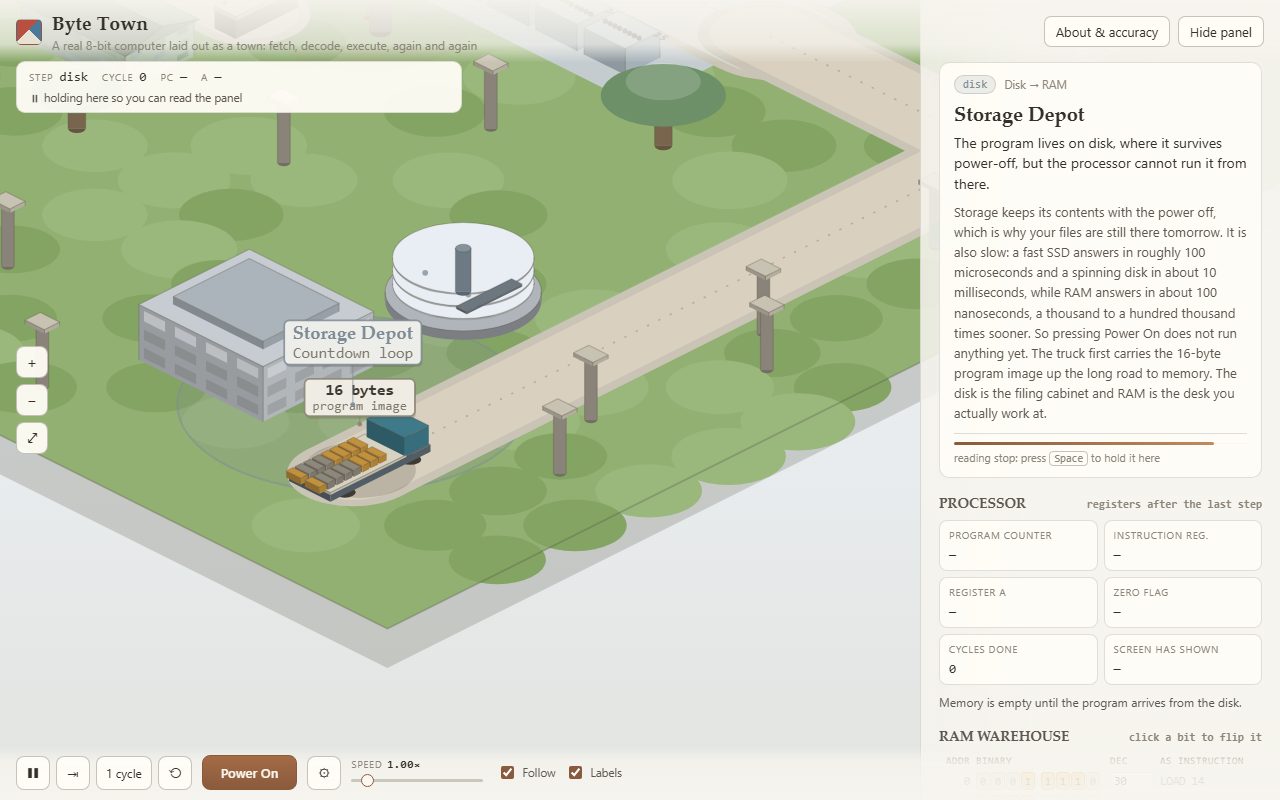 Byte TownA real 8-bit computer laid out as a small town. A truck carries actual bytes from the storage depot to the memory warehouse and the processor's workshops, running a short program step by step. Flip any bit in memory or edit an instruction, and watch the registers, the program counter and the screen change.Open the live explorable (opens in a new tab)
1. Everything Is Numbers: Bits, Bytes and Memory Addresses
2:31 narrated video
2. The Heartbeat: Fetch, Decode, Execute
2:29 narrated video

3. Loops, Decisions and the Wider Machine
2:34 narrated video
Taken apart
A typical ATX desktop PC (tower laid on its side, side panel up)
Drag to turn the model, drag the slider to pull it apart, and select any part to read what it does.
The tower is laid on its side the way a technician works on it, so most parts lift straight up (+z). The two drives and the power supply slide out sideways along their bays: the drive out the front (+y), the PSU and rear fan out the back (−y). Unplug the PC before step 1. The order is a real teardown, from the side panel down to the bare motherboard.
Select a part, in the model or in the list, to read what it does.
What is real in this model
- 3 scaled
- 3 assumed
- 4 faked
Modelled in Blender by the generator from its own parts list: a typical desktop PC laid on its side. The parts and the order they come out are the substance; the exact parts list and their places on the board are a typical build rather than a measured one.
What is real in the simulation
- 8 computed
- 3 scaled
- 3 assumed
- 5 faked
Memory, decoding, the program counter, arithmetic, the zero flag and branching are computed by a real tiny processor running a real program. Its instruction set is invented for teaching, it is scaled down to 16 bytes and one register, and the ledger marks the shortcuts as faked: no caches or pipelining, and distances that stand in for speed.
Changed by hand
Nothing. This is the generator's output as it came out.
1 module · 3 narrated lessons · 1 exploded view in 3D · 1 explorable
How the Steam Train Works
Follow coal, fire and steam around a working locomotive, from the firebox to the driving wheels and back up the chimney.
Topic typed in: “How the steam train works?”
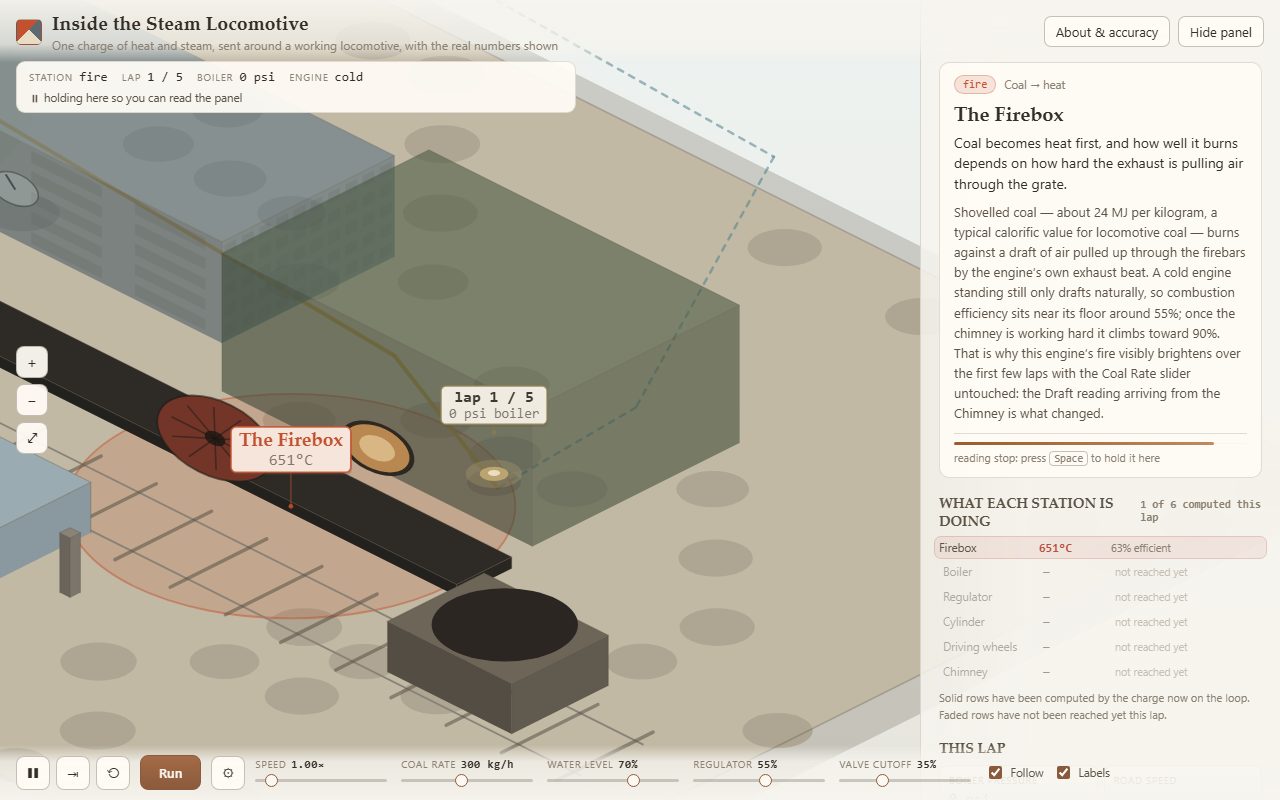 Inside the Steam LocomotiveSend a charge of heat and steam around a working locomotive: firebox, boiler, regulator, cylinder, driving wheels and chimney. Change the coal rate, water level, regulator and cutoff, and watch pressure build lap by lap and the exhaust pull the fire hotter.Open the live explorable (opens in a new tab)
1. Fuel and Fire
1:36 narrated video

2. Boiler, Pressure, and the Regulator
1:47 narrated video
3. Pistons, Wheels, and Motion
2:05 narrated video
Taken apart
Steam Locomotive
Drag to turn the model, drag the slider to pull it apart, and select any part to read what it does.
Order follows a top-down, front-to-back teardown: loose top fittings (chimney, dome) lift off first, the boiler shell comes off the frame next, the firebox separates from the boiler's rear, then the front motion work (cylinder, piston, rod, wheel) is undone, leaving the bare frame last.
Select a part, in the model or in the list, to read what it does.
What is real in this model
- 2 scaled
- 3 assumed
- 2 faked
Modelled in Blender by the generator from its own parts list. The parts, their order and what each does are the substance; the proportions follow a typical small locomotive, and the firebox and smokebox come apart more cleanly than they would in a workshop.
What is real in the simulation
- 10 computed
- 1 scaled
- 3 assumed
- 2 faked
Combustion, steam generation, boiler pressure carried lap to lap, piston force, torque, road speed and the chimney's draft are computed live. Firebox gas temperature, the tractive-effort factor and rolling resistance are textbook assumptions, the cylinder and wheel sizes are scaled, and the yard scenery and the missing counterbalance are marked as faked.
Changed by hand
- Nothing in the content. Generation was restarted after server faults (a storage permission and a usage limit), which re-ran the failed steps without changing anything already built.
1 module · 3 narrated lessons · 1 exploded view · 1 explorable
How a Jet Engine Works
Ride with the air through a turbofan as it is sucked in, squeezed, set on fire and blasted out the back.
Topic typed in: “How jet engine works?”
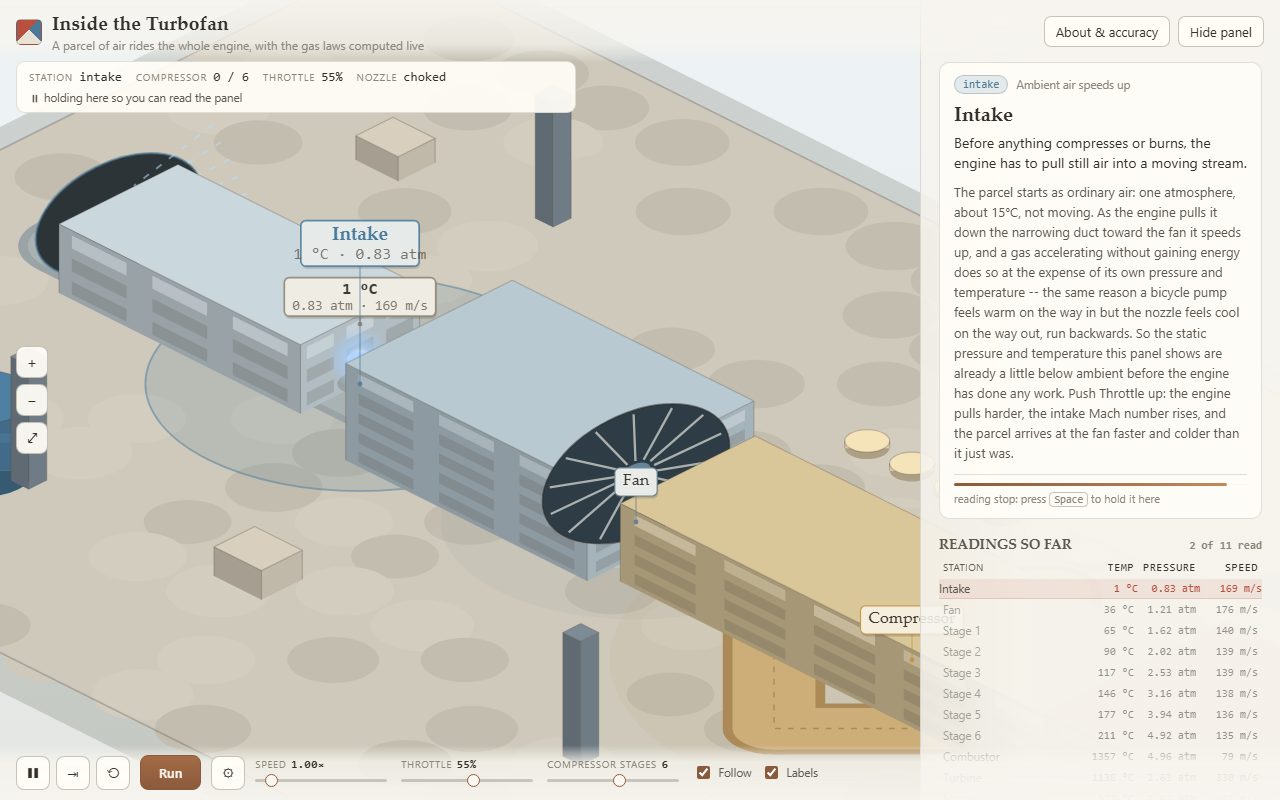 Inside the TurbofanA parcel of air rides the whole engine on a test stand, station by station, with its temperature, pressure and speed worked out at each one. Push the throttle or add compressor stages and every station downstream is recomputed, down to the thrust.Open the live explorable (opens in a new tab)
1. Sucking In and Squeezing: Intake, Fan, and Compressor
2:14 narrated video

2. Fire and Spin: The Combustor and Turbine
1:48 narrated video

3. Blasting Out the Back: Thrust and Newton's Third Law
2:13 narrated video
Taken apart
Turbofan jet engine
Drag the slider to pull it apart, and select any part to read what it does. The parts outlined in dashes are drawn see-through so nothing behind them is hidden.
Lift the nacelle straight up to expose the fan and core. Then work front to back along the centerline — fan, booster, high-pressure compressor, combustor, high-pressure turbine, low-pressure turbine, nozzle — and finally slide the concentric shaft pair out sideways from the hollow core.
Select a part, in the drawing or in the list, to read what it does.
What is real in this drawing
- 2 scaled
- 2 assumed
- 2 faked
The parts, their order and what each one does are the substance. Relative diameters follow a typical turbofan, and multi-stage sections are drawn as single parts, which the ledger marks as faked.
What is real in the simulation
- 9 computed
- 2 scaled
- 4 assumed
- 3 faked
Compression, combustion, turbine work, the choking nozzle and thrust are computed from the gas laws. Component efficiencies and pressure ratios are textbook assumptions, and the ledger admits the simplifications outright: one shaft instead of two, and no separate bypass duct.
Changed by hand
- Nothing in the content. Generation was restarted after server faults (a storage permission and a usage limit), which re-ran the failed steps without changing anything already built.
1 module · 4 narrated lessons · 1 explorable
How Large Language Models Work
Peek inside the machine that predicts your next word, one token at a time.
Topic typed in: “How large language models work”
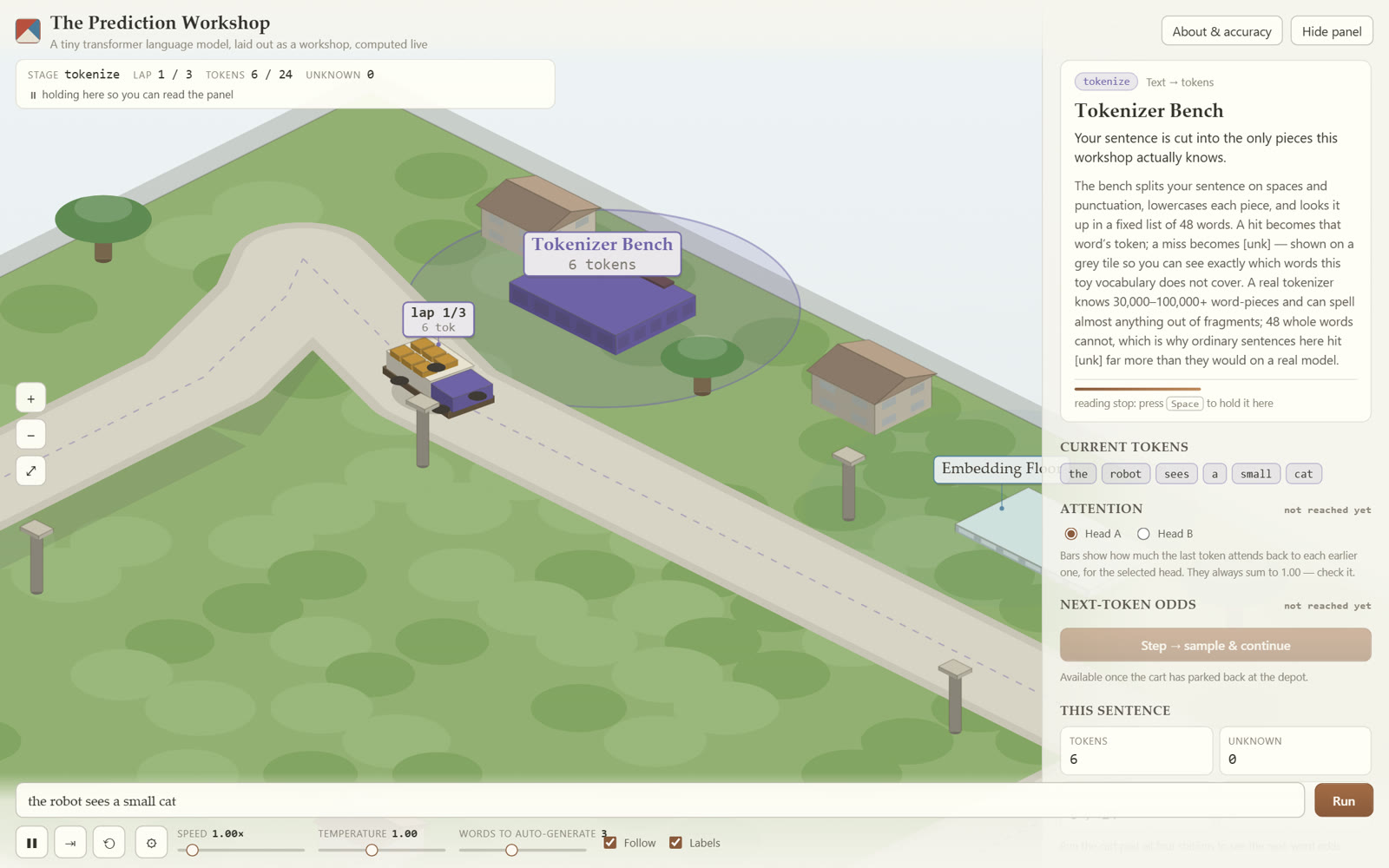 The Prediction WorkshopType a sentence and a cart carries its tokens through a small transformer you can watch: a tokenizer bench, an embedding floor, an attention loom and a prediction counter, with a temperature dial that changes the real softmax.Open the live explorable (opens in a new tab)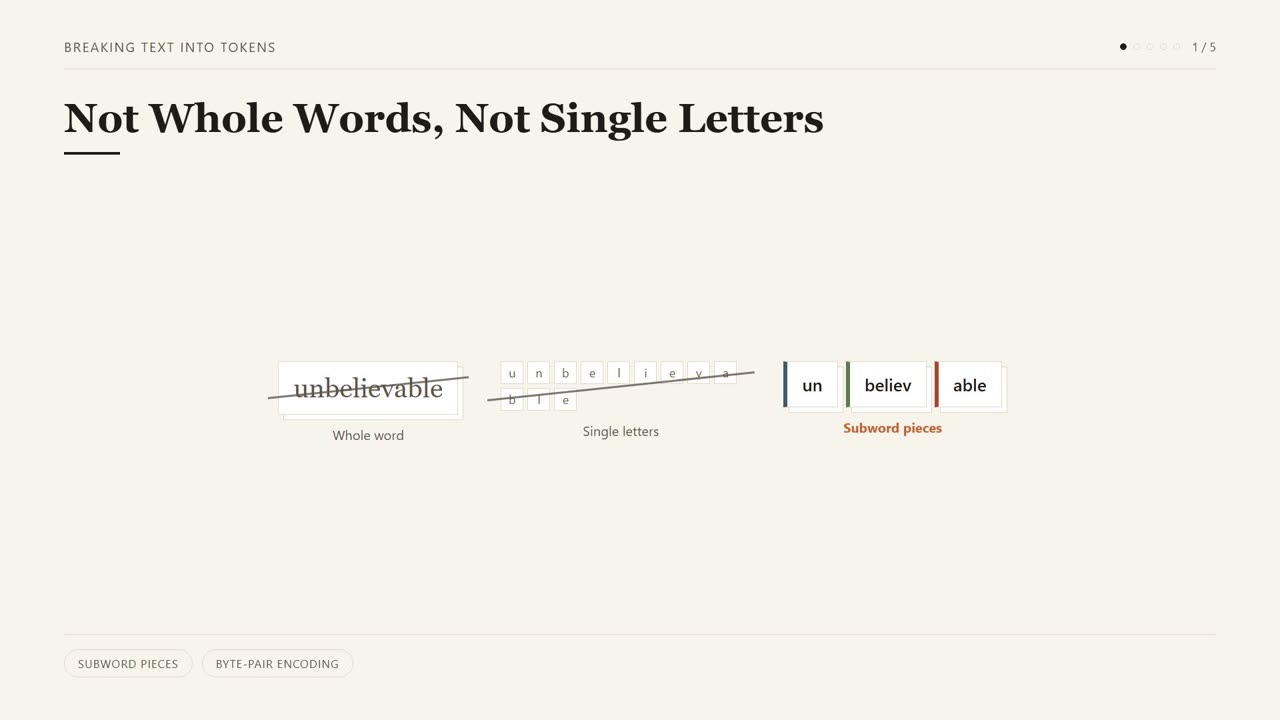
1. Breaking Text into Tokens
2:19 narrated video
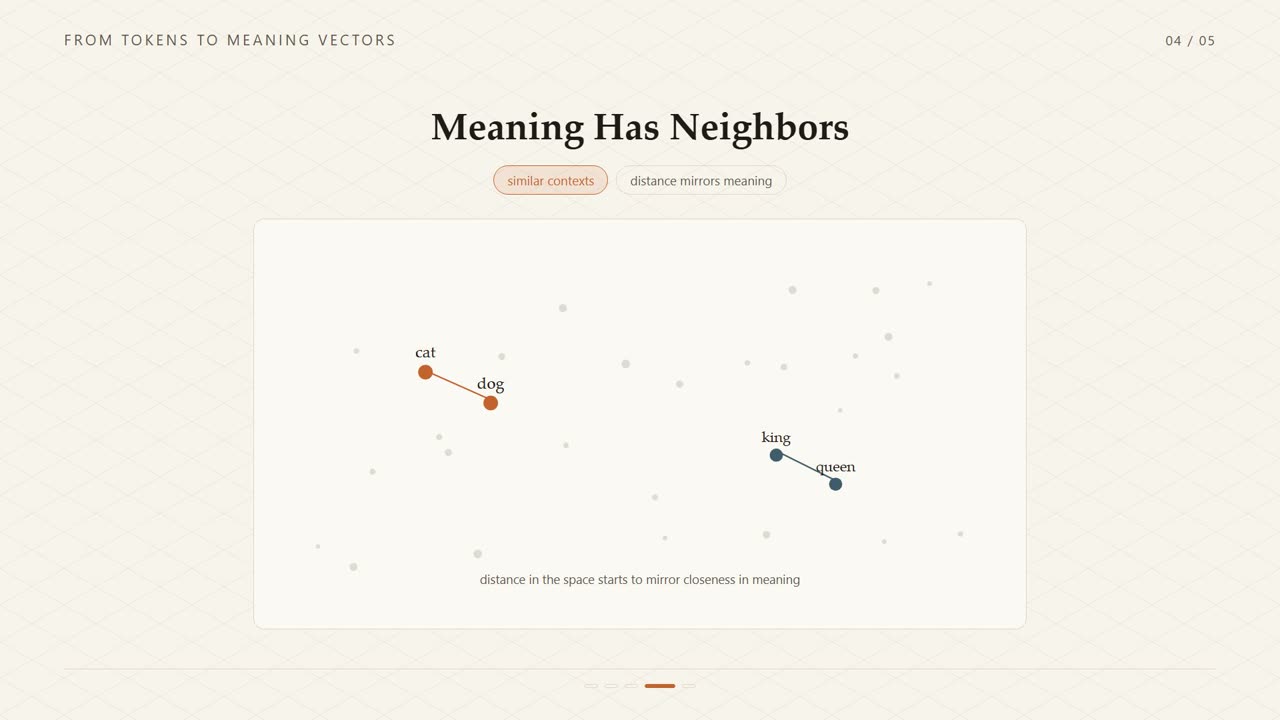
2. From Tokens to Meaning Vectors
2:01 narrated video
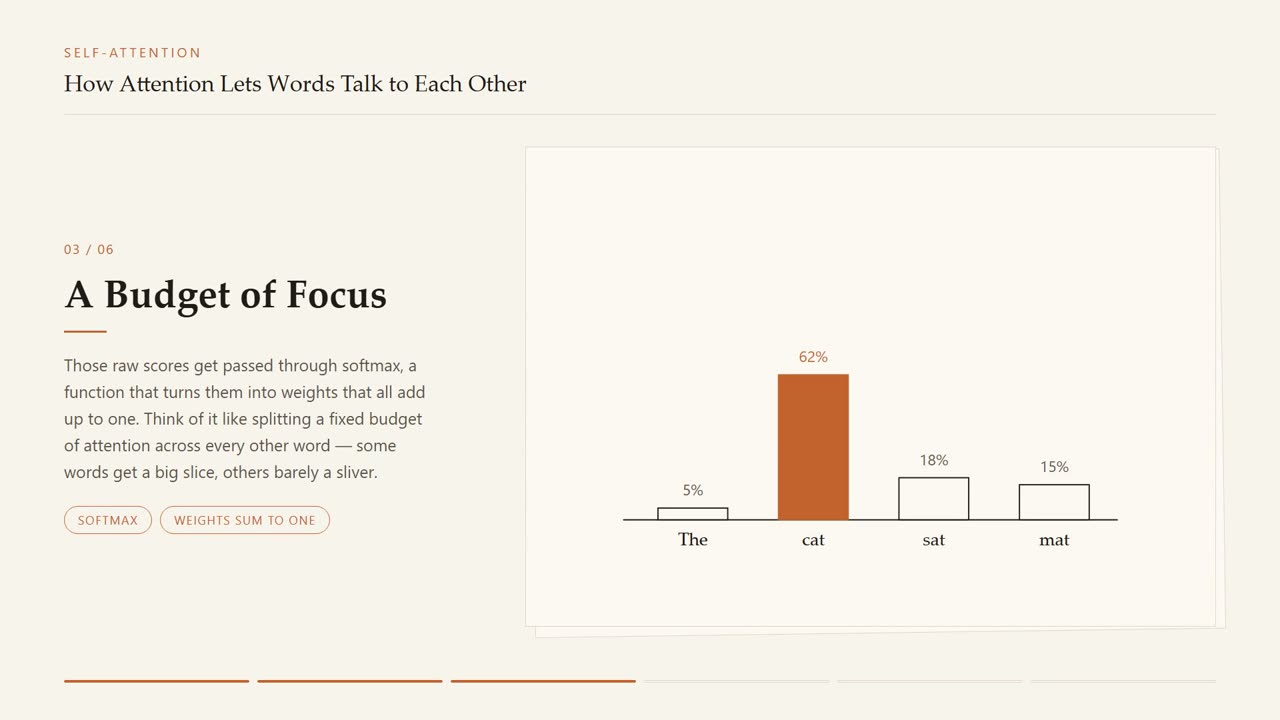
3. How Attention Lets Words Talk to Each Other
2:08 narrated video
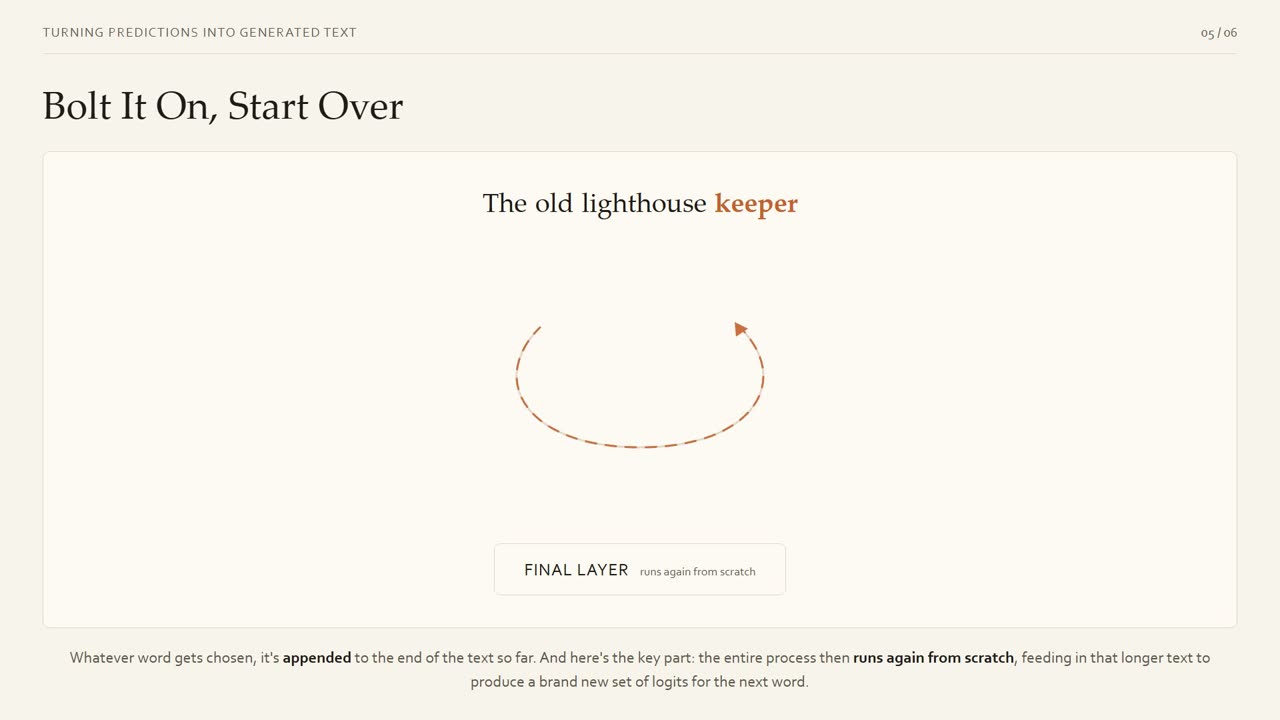
4. Turning Predictions into Generated Text
2:21 narrated video
What is real in the simulation
- 9 computed
- 5 scaled
- 3 assumed
- 1 faked
Tokenizing, attention, softmax and sampling are computed live in the page. The 48-word vocabulary and every weight are invented for teaching, and the ledger admits outright that the predicted words are not meant to make sense.
Changed by hand
- The brief for the simulation first asked for a real transformer's vocabulary and weights, which a static page cannot honestly contain. It was rewritten by hand to ask for a small teaching model, and the generator built the simulation from that brief.
1 module · 4 narrated lessons · 1 exploded view · 1 explorable
How a Four-Stroke Car Engine Works
Watch a single cylinder breathe, compress, fire, and exhaust to see how cars turn fuel into motion.
Topic typed in: “How a four-stroke car engine works”
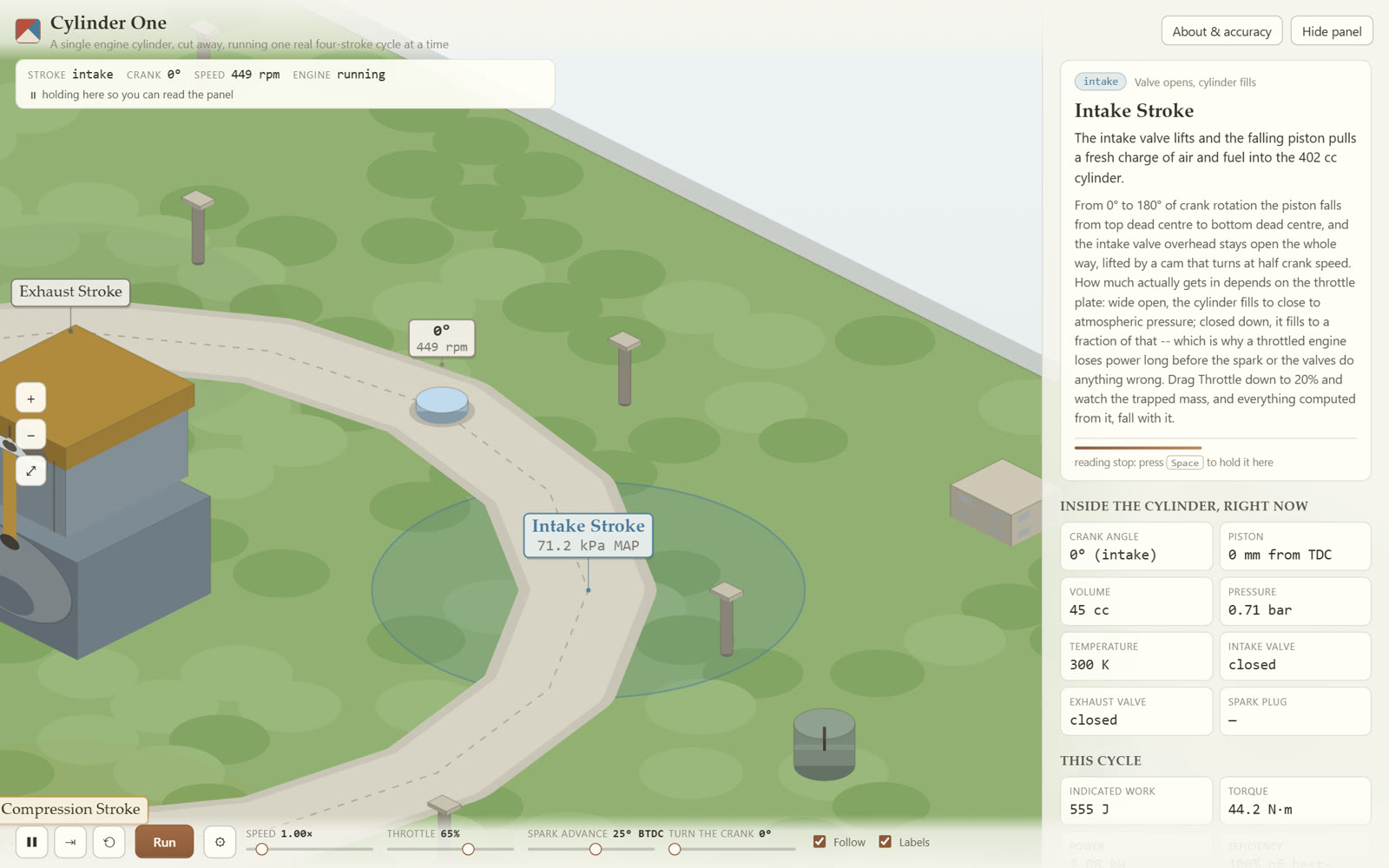 Cylinder OneA cutaway of a single cylinder that actually runs. The piston, valves and spark follow real crank geometry, and the pressure, torque and power readouts are worked out as it turns. Mistune the throttle or the spark advance and watch it run weak, knock or stall.Open the live explorable (opens in a new tab)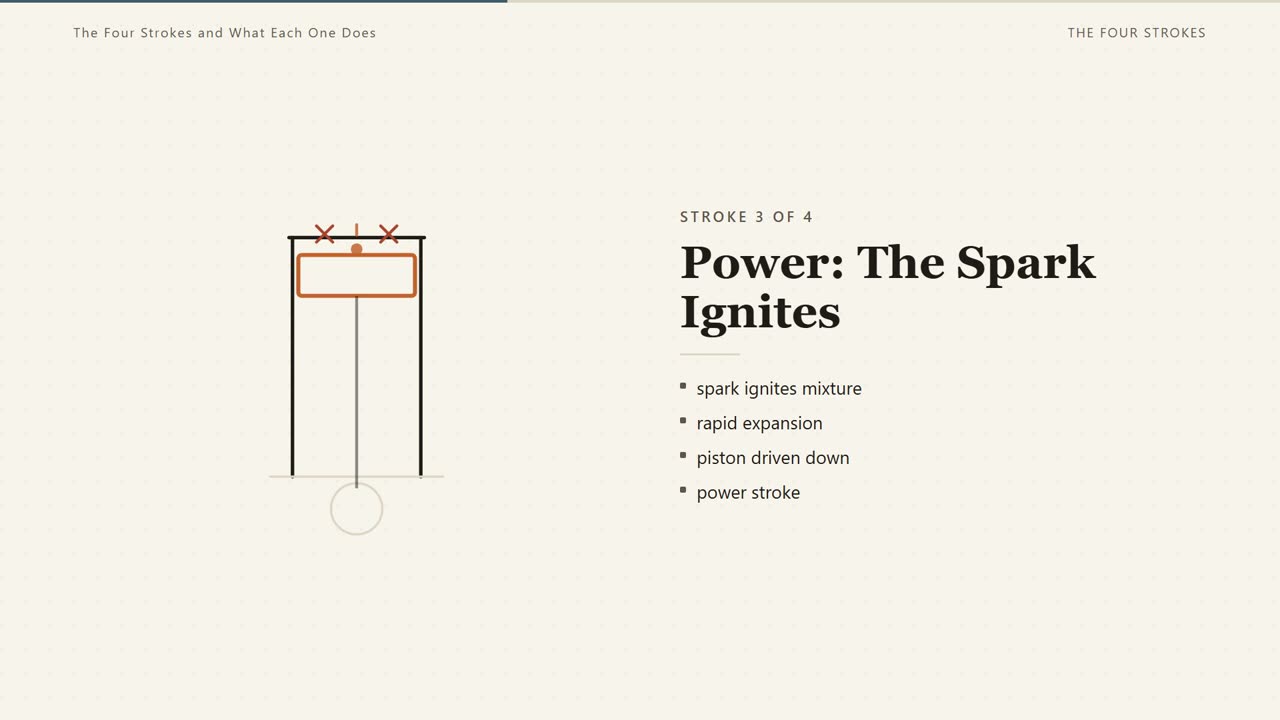
1. The Four Strokes and What Each One Does
1:56 narrated video
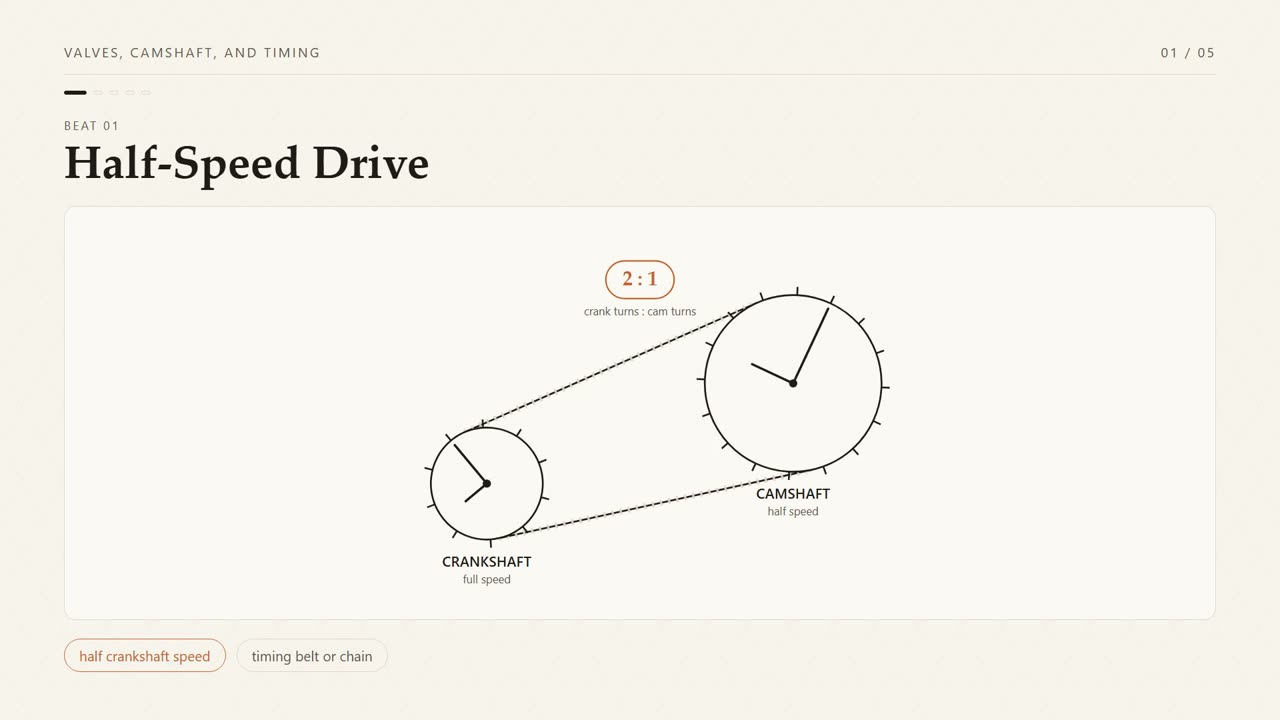
2. Valves, Camshaft, and Timing
2:15 narrated video
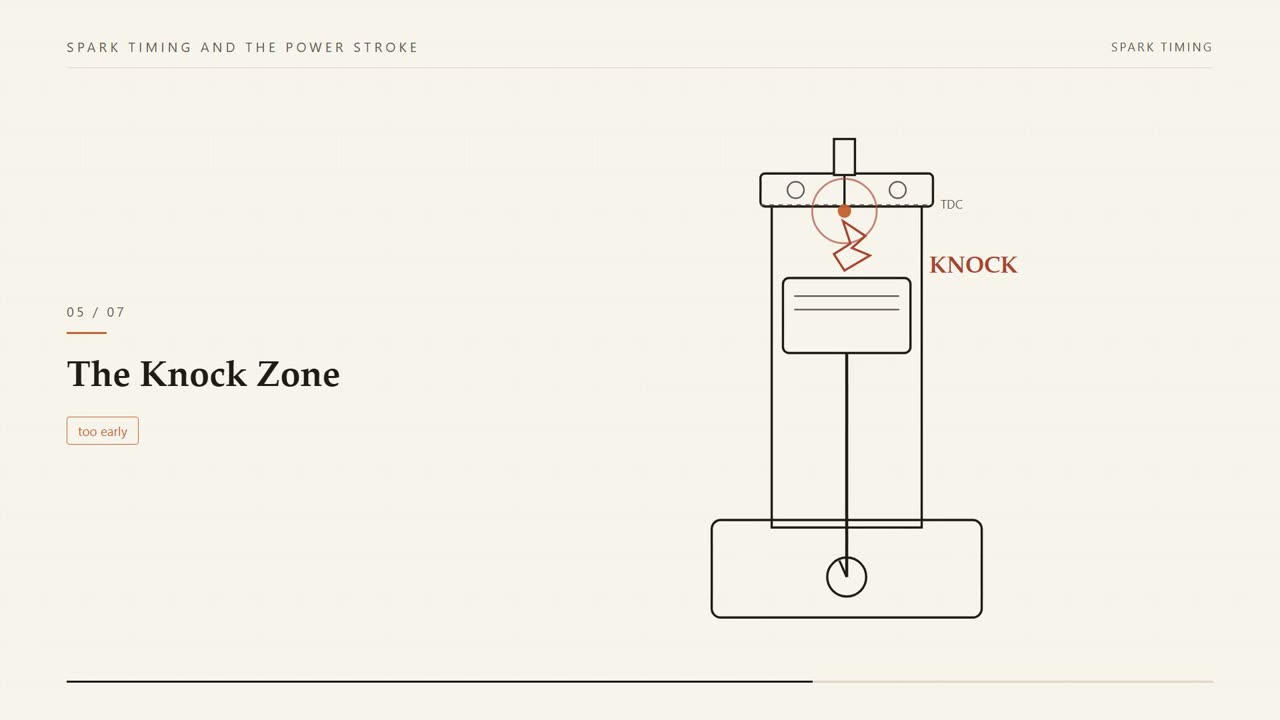
3. Spark Timing and the Power Stroke
2:11 narrated video
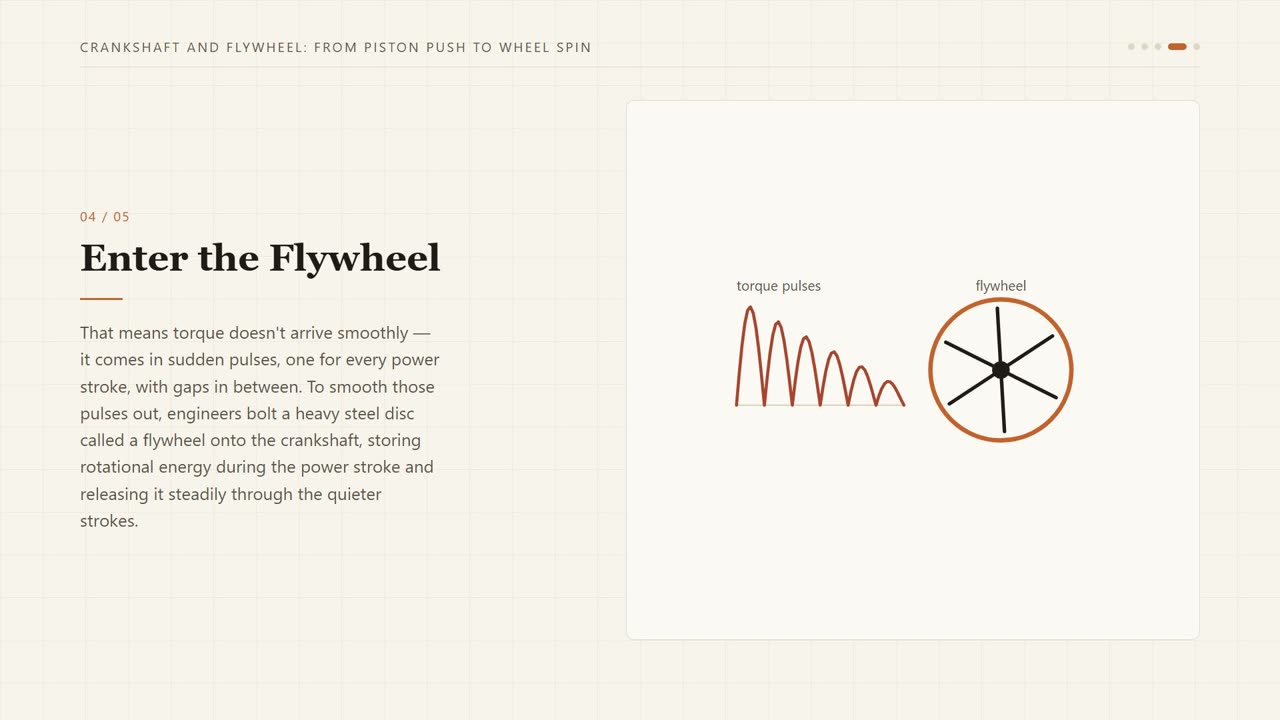
4. Crankshaft and Flywheel: From Piston Push to Wheel Spin
2:07 narrated video
Taken apart
Four-stroke engine cylinder assembly (single-cylinder testbed)
Drag the slider to pull it apart, and select any part to read what it does. The parts outlined in dashes are drawn see-through so nothing behind them is hidden.
Order follows an actual teardown: unscrew the spark plug, lift the camshaft and both valves out of the head, unbolt the head from the block, draw the piston up out of the bore, slide the ring pack off it and drive out the wrist pin, then drop the connecting rod and finally the crankshaft out of the crankcase — leaving the block as the one part that never moves.
Select a part, in the drawing or in the list, to read what it does.
What is real in this drawing
- 3 scaled
- 2 assumed
- 1 faked
The parts, their order and what each one does are the substance. Proportions are a typical engine rather than a measured one, and the distances parts travel as it opens are chosen for legibility, which the ledger marks as faked.
What is real in the simulation
- 7 computed
- 1 scaled
- 8 assumed
- 2 faked
Piston position, valve lift, cylinder pressure and temperature, work, torque and engine speed are computed live. The gas properties, the combustion curve and the friction are textbook assumptions, and the knock warning is a teaching signal rather than real knock detection, which the ledger marks as faked.
Changed by hand
- Nothing in the content. The simulation's builder ran out of steps while re-checking a build it had already finished. That build passed the same automated checks every simulation must pass and was published unchanged, without the builder's own test screenshots.
Lean introduction · 1 module · 2 narrated lessons
How a Mechanical Watch Works
A first look inside the tiny machine on your wrist
Topic typed in: “How a mechanical watch works”
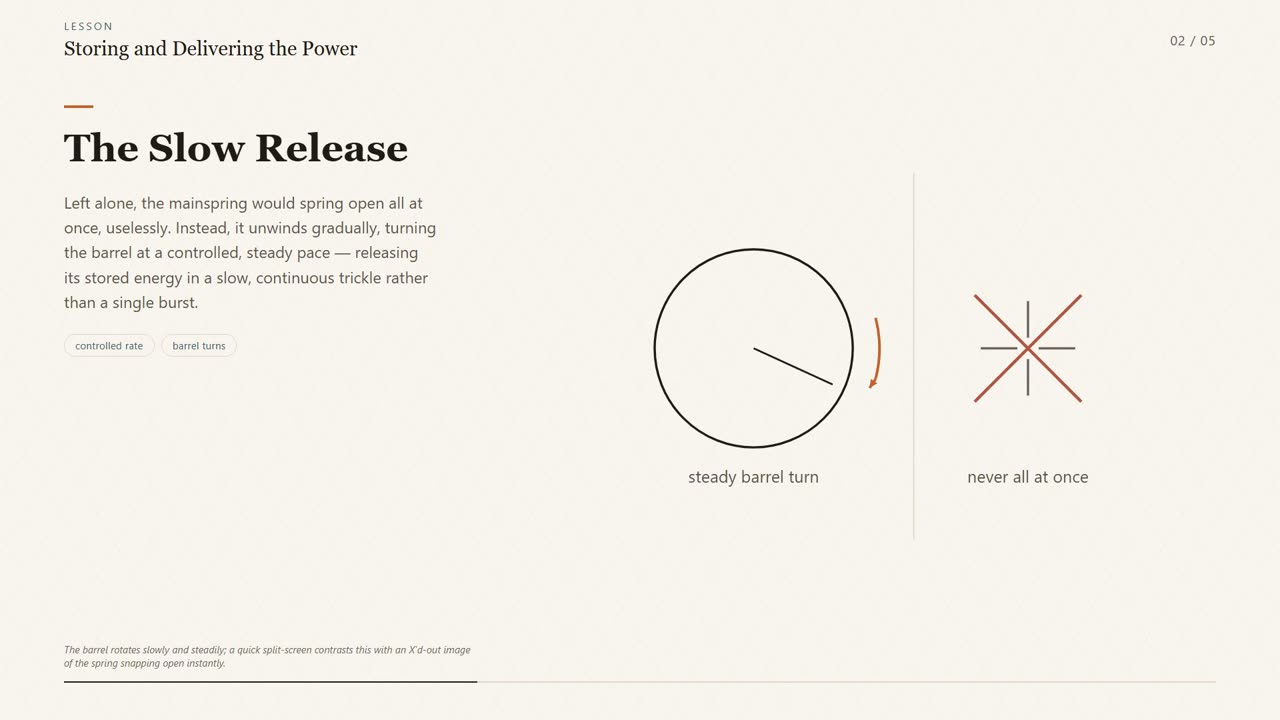
1. Storing and Delivering the Power
1:52 narrated video
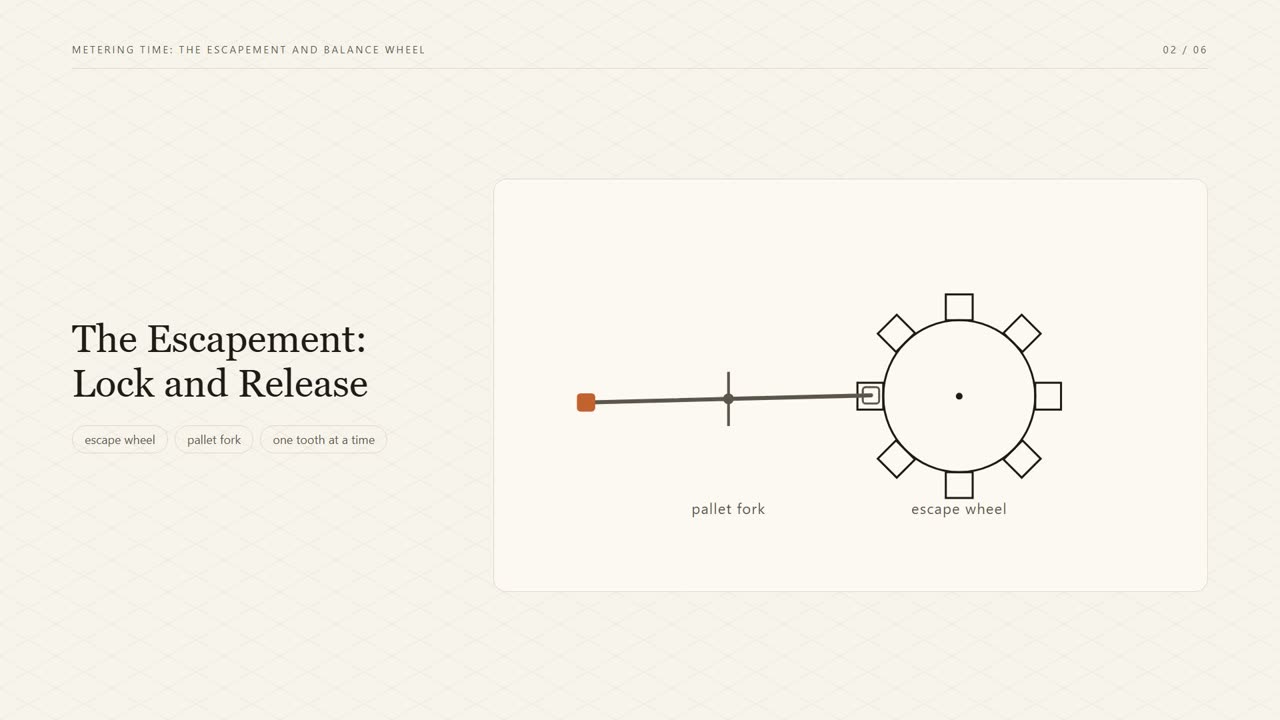
2. Metering Time: the Escapement and Balance Wheel
2:21 narrated video
Changed by hand
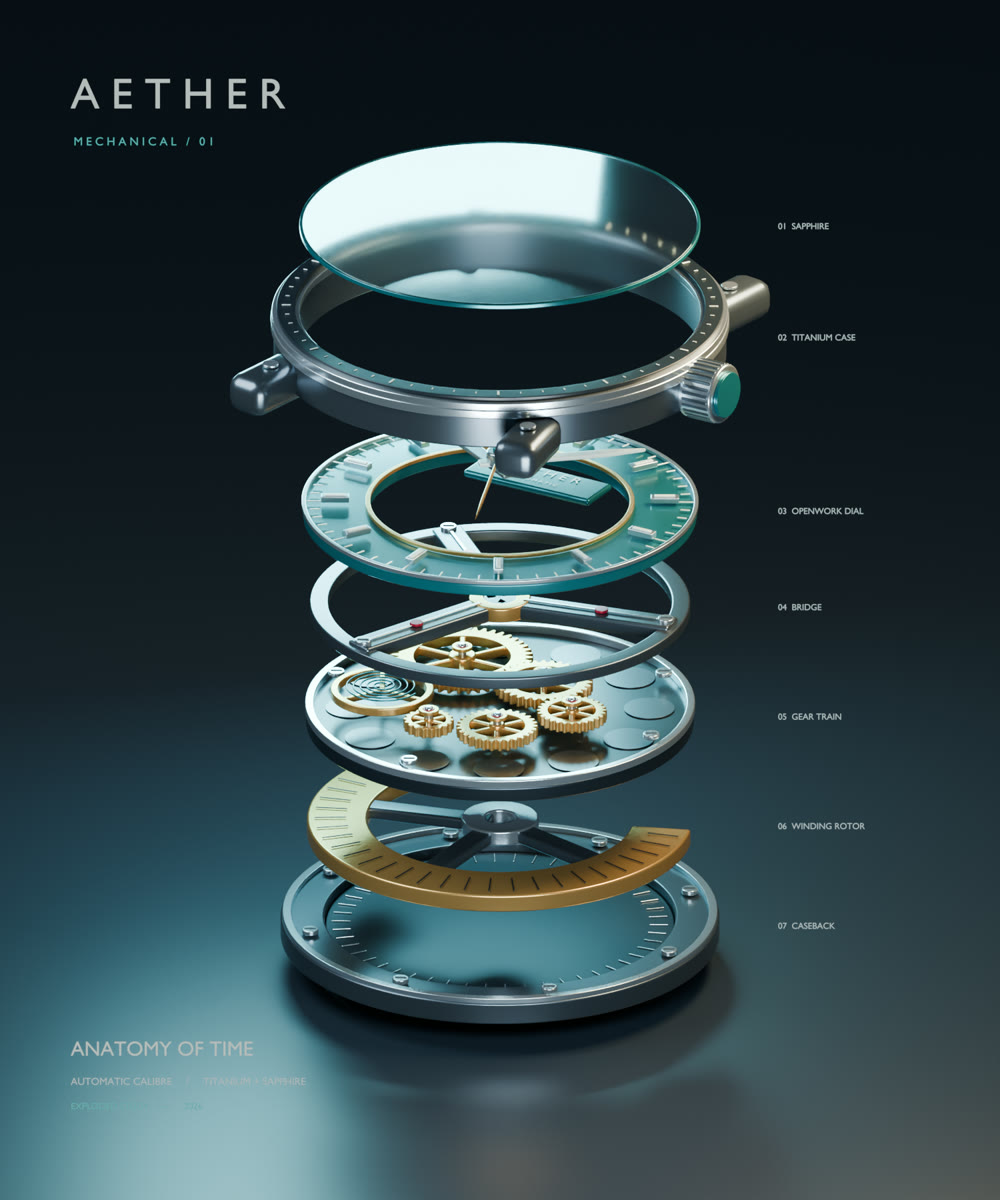
- The 3D watch beside the clip was modelled by hand in Blender, not by the generator.
- Generation was stopped after the two narrated lessons, before the explorable was built: this card is a demo of the clips. The generator's own labelled diagram of the watch failed its checks, so the course has none.
Examples
This is what an explorable looks like
These four were built by hand, not by the generator. They are the reference works it is modelled on: three worlds that run a whole system, and one live diagram of a calculation. Every course module gets one of those two kinds.
TokenTown
How an LLM works, as a city
Every district is one stage of a transformer. A convoy carries the hidden state from the docks where text is cut into tokens, through the foundry that casts it into a vector, around the layer ring once per block, to the sampler that gambles it into the next word.
The temperature and top-p sliders drive the real sampler: turn them and the numbers move.
Open the live explorable(opens in a new tab)ChipTycoon
How a computer chip is made
An isometric theme park that is really a fab. One cart carries a single wafer through twenty buildings, and its cargo changes at every stop: a heap of sand, rough silicon, a silver crystal, a mirror-flat disc, a patterned one, a tray of finished chips.
Twenty stops, each pausing long enough to read, then the lorry runs it out to the data centre.
Open the live explorable(opens in a new tab)EUV Lithography
How 13.5 nm light prints a chip
The same idea in a different costume: an ASML machine laid out as a production and operation manual. Tin-plasma source, illuminator, projection optics, wafer stage, with a factory trainer where you route the parts yourself.
It states outright that it is a teaching model and its values are rounded, rather than implying precision it doesn't have.
Open the live explorable(opens in a new tab)NextWord
A tiny language model, with its insides showing
The other kind of explorable: the calculation itself, drawn as one diagram. Type a few words and a small, real transformer turns them into a guess for the next one, with every box holding the numbers it actually computed, from embeddings through two attention heads to the final odds.
Hover a word to follow it through every step, open any box for its numbers, and drag temperature and top-k to re-run it.
Open the live explorable(opens in a new tab)